

Virtual production for advertising is becoming one of the most useful ways for brands to create premium campaigns without slowing down every time a location, product, format, or market changes. Instead of treating film, CGI, VFX, motion graphics, AI avatars, and localization as separate jobs, virtual production connects them into one flexible creative workflow.
For marketing teams, the value is practical. A campaign can move from concept to storyboard, real-time environment, avatar-led content, product demo, social cutdown, and localized version with fewer disconnected handoffs. The result is not just speed. It is stronger creative control across every channel where the brand appears.
Mimic Advertising already blends creative production, VFX and 3D, digital avatars, and production technology, which makes virtual production a natural next step for brands that want cinematic advertising with measurable business impact.
Table of Contents
What Virtual Production Means for Advertising
Virtual production uses real-time 3D environments, LED-stage thinking, virtual cameras, motion capture, CGI assets, and live compositing to help creative teams see the campaign world while they are making it. In advertising, that means a director, brand team, agency, and VFX team can make decisions earlier instead of waiting for a long post-production reveal.
The same production system can support a hero film, product launch, social media sequence, interactive demo, virtual influencer moment, and ecommerce visual. This matters because modern campaigns rarely live in one format. A brand may need cinematic launch content, vertical videos, localized edits, explainers, and testing variants from the same idea.
A strong virtual production workflow still begins with story. The technology only helps when the campaign has a clear audience, message, product truth, art direction, and performance goal. That is why it pairs well with AI advertising production workflows that connect strategy, creative development, VFX, localization, and measurement.
Why Brands Are Moving Toward Real-Time Campaign Workflows
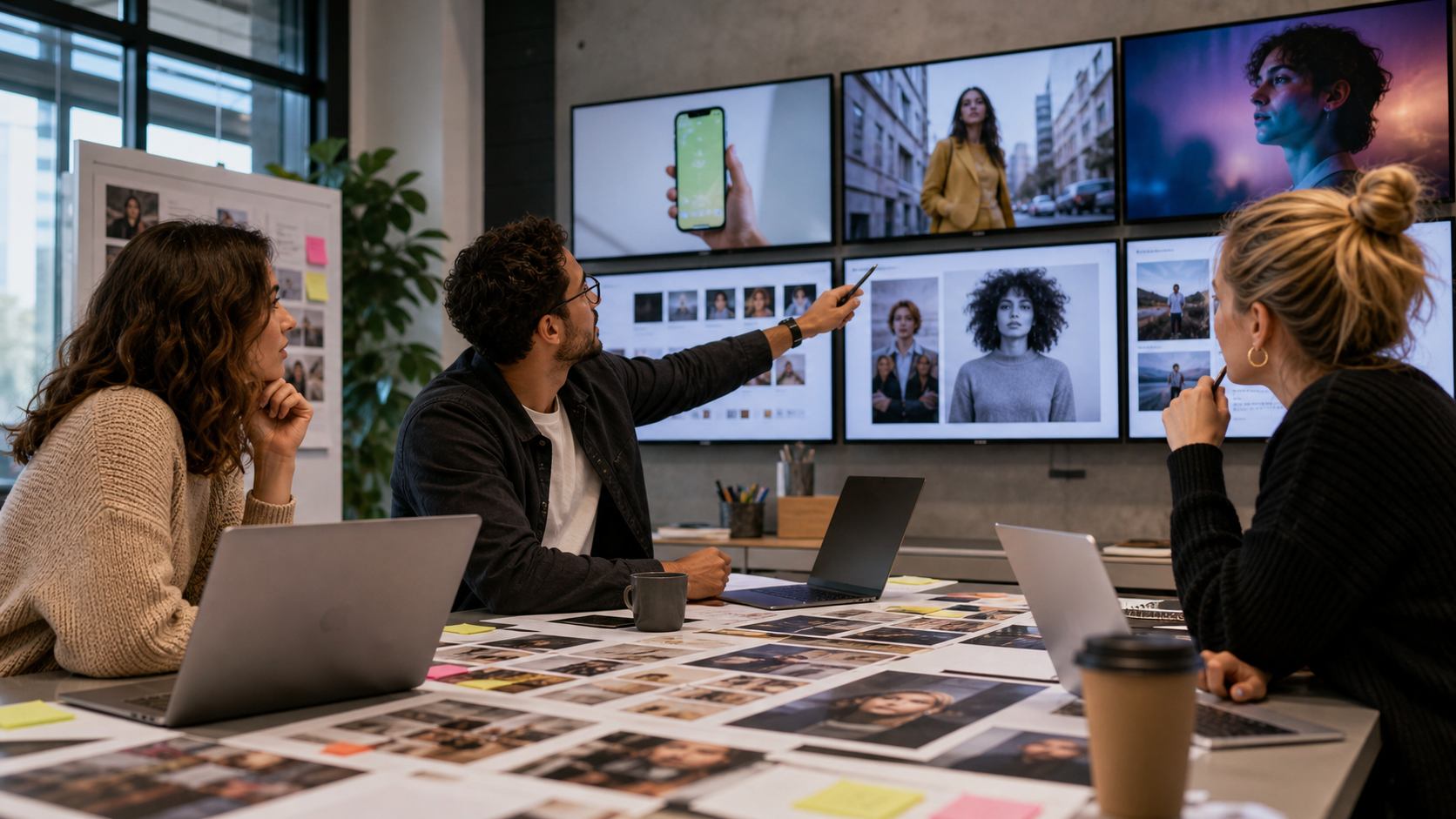
Brands are under pressure to make more campaign assets, personalize them for more audiences, and prove performance faster. Virtual production helps by reducing the distance between idea, asset, shoot, edit, and variant. A location can become a controllable 3D scene. A product can appear in multiple settings. A digital presenter can be adapted for a launch, demo, or customer education sequence.
Faster approvals because stakeholders can review environments, framing, and motion earlier.
Better asset reuse across hero films, short-form videos, product demos, and stills.
More consistent brand worlds because lighting, environments, characters, and product assets stay connected.
Smarter versioning for channels, regions, languages, offers, and campaign stages.
This is especially valuable when a campaign also needs social media video production, motion graphics, and localized edits. Instead of rebuilding creative from scratch, teams can adapt a controlled campaign world with purpose.
Virtual Production vs Traditional Advertising Production
Traditional production often separates the shoot from the digital build. Teams capture footage first, then wait for VFX, CGI, retouching, and versioning to solve what could not be seen on set. Virtual production brings more of that decision-making forward. It does not remove live action or post-production; it gives them a clearer shared map.
Concept review: traditional workflows rely on boards and references; virtual production can show a closer real-time preview of the campaign world.
Locations: traditional shoots depend on availability and logistics; virtual environments can be designed, reused, and adapted.
Product visuals: traditional production often needs separate photography, CGI, and retouching; virtual production can keep product assets connected to the campaign scene.
Versioning: traditional edits can become expensive late in the process; virtual production makes planned variations easier to manage.
High-Value Use Cases for Brand Campaigns
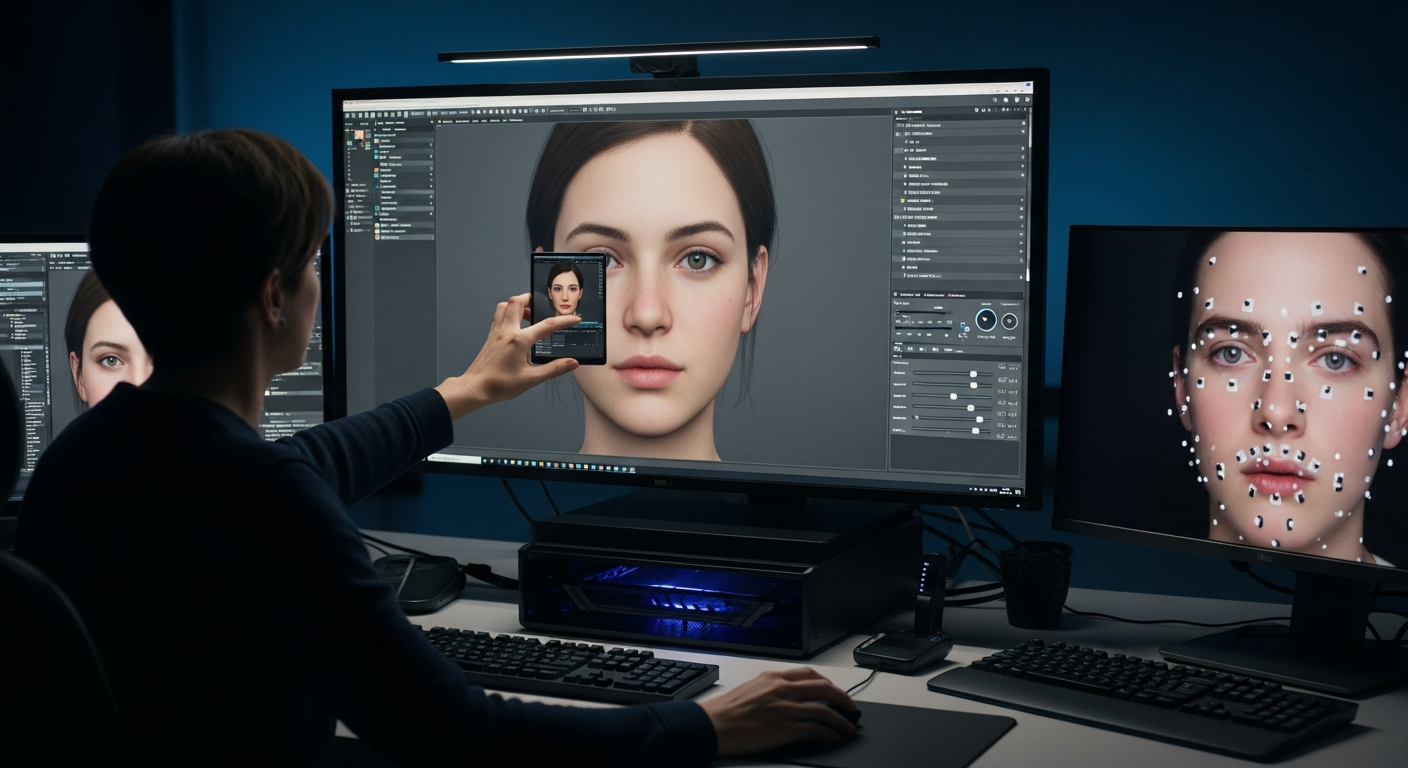
Virtual production works best when a brand needs scale, flexibility, or a visual world that would be expensive or impossible to capture conventionally. It is not only for large film-style commercials. It can support practical advertising problems across the customer journey.
Launch campaigns: build cinematic product worlds that can produce hero films, teasers, stills, and vertical cutdowns.
Product demos: explain technical features through controlled 3D scenes, camera moves, and close-up details.
Digital spokespeople: combine virtual sets with AI avatars for social media ads, explainers, and event content.
Localized campaigns: adapt environments, language, voiceover, pacing, and offer variants without losing the main campaign idea.
B2B and complex services: turn abstract value propositions into visual stories that are easier to understand and share.
The customer journey also changes. Discovery content can use cinematic hooks. Consideration content can reuse the same scene for proof points and demos. Conversion content can become product-specific. Retention content can educate customers through familiar brand environments and recurring digital hosts.
Data, Assets, and Team Inputs You Need
A virtual production campaign becomes easier when the team gathers the right inputs before design begins. Missing assets are one of the biggest reasons real-time workflows lose momentum. A practical production brief should collect the brand, product, audience, and measurement information that will guide every visual choice.
Brand system: logo files, color rules, typography, tone of voice, claims, and examples of approved creative.
Product assets: CAD files, 3D models, photography, material references, packaging, and usage details.
Audience strategy: primary segments, customer objections, buying triggers, regional needs, and platform behavior.
Production requirements: aspect ratios, channels, languages, deliverables, deadlines, accessibility needs, and approval steps.
Measurement plan: creative testing goals, engagement signals, conversion events, and the decisions each metric should inform.
Step-by-Step Implementation Workflow
The best implementation path starts small enough to manage, then expands into a reusable campaign system. Brands do not need to virtualize everything in the first project. They need one clear use case, one strong creative world, and a plan for turning that world into multiple assets.
Define the campaign job: awareness, launch, education, conversion, localization, or retargeting.
Build the visual language: environment, lighting, character style, camera grammar, product treatment, and motion rules.
Prepare real-time assets: product models, 3D environments, avatar rigs, motion-capture needs, and texture references.
Create a hero sequence, then map the cutdowns, stills, demos, and localized versions that should come from it.
Test and refine: compare creative variants, audience signals, retention, conversion quality, and production efficiency.
This workflow becomes even stronger when paired with AI creative testing. The production team can learn which worlds, characters, hooks, and product angles drive better attention before investing in a bigger asset suite.
Mistakes to Avoid
Virtual production can make campaigns faster, but poor planning can make them feel expensive, generic, or overbuilt. The most common mistakes are usually creative management problems, not technology problems.
Starting with technology instead of the campaign idea and audience need.
Building beautiful environments that do not help the product, message, or conversion path.
Ignoring rights, likeness permissions, product accuracy, claims review, or disclosure requirements.
Treating every platform as the same edit instead of planning vertical, short-form, long-form, and interactive uses early.
Measuring only views instead of connecting creative performance to attention, lead quality, sales signals, and reuse value.
These mistakes also appear in broader brand systems. A campaign can look technically impressive and still weaken consistency if the team has not addressed brand identity design mistakes before production begins.
KPIs That Prove Virtual Production Is Working
Virtual production should be measured as both a creative system and a performance system. The campaign needs to look better, move faster, and create learning that improves future work.
Production efficiency: time from concept to approved hero asset, number of reusable assets, and versioning speed.
Creative quality: completion rate, thumb-stop rate, attention, recall, and qualitative stakeholder review.
Conversion quality: click-through rate, lead quality, add-to-cart behavior, booked calls, or sales-assisted engagement.
Localization impact: performance by market, language, cultural variant, and channel-specific edit.
Asset lifetime value: how often the same 3D model, environment, avatar, or motion system supports future campaigns.
Responsible AI, Rights, and Brand Trust
Virtual production increasingly overlaps with AI-assisted concepting, synthetic performers, digital humans, facial capture, customer data, and personalized content. That makes responsible production part of the creative brief. Trust is not a legal afterthought; it shapes whether people accept the campaign experience.
Confirm likeness rights, talent permissions, music rights, asset ownership, and usage windows before scaling variants.
Use disclosure when synthetic people, AI avatars, or interactive experiences could affect user trust or expectations.
Keep customer data and creative testing data separated from generation workflows unless there is a clear approved use.
Review claims, regulated topics, representation, accessibility, and regional cultural context before launch.
The same care applies to conversational experiences. If a campaign uses interactive digital people, the knowledge base, handoff rules, moderation, and privacy expectations should be reviewed as carefully as the visuals. This is one reason conversational AI for customer support belongs inside the campaign planning conversation, not just the technology discussion.
Future Trends in Virtual Production Advertising
The next phase of virtual production advertising will be less about one spectacular shoot and more about connected creative ecosystems. Brands will build libraries of 3D products, digital locations, motion rules, avatar talent, and platform-specific formats that can support many campaigns over time.
Real-time 3D assets will move between commercials, ecommerce, XR experiences, product configurators, and sales demos.
Digital humans will become recurring brand ambassadors, product experts, event hosts, and social presenters.
Localization will adapt visuals, pacing, voice, and examples, not only translated captions.
Campaign learning will feed back into concept development, shaping which worlds, messages, and formats are built next.
The brands that benefit most will not chase novelty for its own sake. They will use virtual production to make better stories, more useful product content, stronger AI-powered brand storytelling, and more consistent customer experiences.
FAQs
What is virtual production for advertising?
Virtual production for advertising uses real-time 3D environments, CGI, virtual cameras, motion capture, and compositing to create campaign content with more creative control and faster iteration.
Is virtual production only for big-budget commercials?
No. It can also support product demos, social cutdowns, explainers, avatar-led content, localized campaign versions, ecommerce visuals, and B2B storytelling.
How does virtual production help campaign speed?
It lets teams preview scenes earlier, reuse 3D assets, adapt environments, plan versions from the start, and reduce late-stage rework across formats and markets.
Can virtual production work with AI avatars?
Yes. AI avatars or digital humans can appear inside virtual sets as brand ambassadors, product guides, livestream hosts, training presenters, or recurring campaign characters.
What assets are needed before a virtual production campaign?
Useful inputs include brand guidelines, product files, 3D models or references, campaign goals, audience insights, localization needs, approval rules, and measurement criteria.
How should brands measure virtual production performance?
Measure production speed, asset reuse, creative quality, attention, engagement, conversion quality, localization performance, and the long-term value of reusable 3D and avatar assets.
Does virtual production replace traditional production?
No. It extends traditional production by connecting live action, CGI, VFX, real-time environments, editing, and versioning into a more flexible campaign workflow.
Why should a brand work with a studio for virtual production?
A studio brings strategy, storytelling, VFX, 3D, digital humans, motion capture, editing, localization, and quality control. The technology is powerful, but the campaign still needs direction and craft.
Conclusion
Virtual production for advertising gives brands a more flexible way to build cinematic campaigns, product stories, social assets, and localized versions from one connected creative system. It works because it brings strategy, visual development, real-time 3D, VFX, AI-assisted production, and performance learning into the same workflow.
For brands that want more than one-off assets, this is the real opportunity: build a world, refine it with data, adapt it responsibly, and reuse it across the full campaign journey.
Need this service for your brand? Contact Mimic Advertising to plan a virtual production campaign using creative production, VFX, 3D, digital avatars, AI-assisted workflows, and platform-ready campaign assets.
Virtual production for advertising is becoming one of the most useful ways for brands to create premium campaigns without slowing down every time a location, product, format, or market changes. Instead of treating film, CGI, VFX, motion graphics, AI avatars, and localization as separate jobs, virtual production connects them into one flexible creative workflow.
For marketing teams, the value is practical. A campaign can move from concept to storyboard, real-time environment, avatar-led content, product demo, social cutdown, and localized version with fewer disconnected handoffs. The result is not just speed. It is stronger creative control across every channel where the brand appears.
Mimic Advertising already blends creative production, VFX and 3D, digital avatars, and production technology, which makes virtual production a natural next step for brands that want cinematic advertising with measurable business impact.
Table of Contents
What Virtual Production Means for Advertising
Virtual production uses real-time 3D environments, LED-stage thinking, virtual cameras, motion capture, CGI assets, and live compositing to help creative teams see the campaign world while they are making it. In advertising, that means a director, brand team, agency, and VFX team can make decisions earlier instead of waiting for a long post-production reveal.
The same production system can support a hero film, product launch, social media sequence, interactive demo, virtual influencer moment, and ecommerce visual. This matters because modern campaigns rarely live in one format. A brand may need cinematic launch content, vertical videos, localized edits, explainers, and testing variants from the same idea.
A strong virtual production workflow still begins with story. The technology only helps when the campaign has a clear audience, message, product truth, art direction, and performance goal. That is why it pairs well with AI advertising production workflows that connect strategy, creative development, VFX, localization, and measurement.
Why Brands Are Moving Toward Real-Time Campaign Workflows
Brands are under pressure to make more campaign assets, personalize them for more audiences, and prove performance faster. Virtual production helps by reducing the distance between idea, asset, shoot, edit, and variant. A location can become a controllable 3D scene. A product can appear in multiple settings. A digital presenter can be adapted for a launch, demo, or customer education sequence.
Faster approvals because stakeholders can review environments, framing, and motion earlier.
Better asset reuse across hero films, short-form videos, product demos, and stills.
More consistent brand worlds because lighting, environments, characters, and product assets stay connected.
Smarter versioning for channels, regions, languages, offers, and campaign stages.
This is especially valuable when a campaign also needs social media video production, motion graphics, and localized edits. Instead of rebuilding creative from scratch, teams can adapt a controlled campaign world with purpose.
Virtual Production vs Traditional Advertising Production
Traditional production often separates the shoot from the digital build. Teams capture footage first, then wait for VFX, CGI, retouching, and versioning to solve what could not be seen on set. Virtual production brings more of that decision-making forward. It does not remove live action or post-production; it gives them a clearer shared map.
Concept review: traditional workflows rely on boards and references; virtual production can show a closer real-time preview of the campaign world.
Locations: traditional shoots depend on availability and logistics; virtual environments can be designed, reused, and adapted.
Product visuals: traditional production often needs separate photography, CGI, and retouching; virtual production can keep product assets connected to the campaign scene.
Versioning: traditional edits can become expensive late in the process; virtual production makes planned variations easier to manage.
High-Value Use Cases for Brand Campaigns
Virtual production works best when a brand needs scale, flexibility, or a visual world that would be expensive or impossible to capture conventionally. It is not only for large film-style commercials. It can support practical advertising problems across the customer journey.
Launch campaigns: build cinematic product worlds that can produce hero films, teasers, stills, and vertical cutdowns.
Product demos: explain technical features through controlled 3D scenes, camera moves, and close-up details.
Digital spokespeople: combine virtual sets with AI avatars for social media ads, explainers, and event content.
Localized campaigns: adapt environments, language, voiceover, pacing, and offer variants without losing the main campaign idea.
B2B and complex services: turn abstract value propositions into visual stories that are easier to understand and share.
The customer journey also changes. Discovery content can use cinematic hooks. Consideration content can reuse the same scene for proof points and demos. Conversion content can become product-specific. Retention content can educate customers through familiar brand environments and recurring digital hosts.
Data, Assets, and Team Inputs You Need
A virtual production campaign becomes easier when the team gathers the right inputs before design begins. Missing assets are one of the biggest reasons real-time workflows lose momentum. A practical production brief should collect the brand, product, audience, and measurement information that will guide every visual choice.
Brand system: logo files, color rules, typography, tone of voice, claims, and examples of approved creative.
Product assets: CAD files, 3D models, photography, material references, packaging, and usage details.
Audience strategy: primary segments, customer objections, buying triggers, regional needs, and platform behavior.
Production requirements: aspect ratios, channels, languages, deliverables, deadlines, accessibility needs, and approval steps.
Measurement plan: creative testing goals, engagement signals, conversion events, and the decisions each metric should inform.
Step-by-Step Implementation Workflow
The best implementation path starts small enough to manage, then expands into a reusable campaign system. Brands do not need to virtualize everything in the first project. They need one clear use case, one strong creative world, and a plan for turning that world into multiple assets.
Define the campaign job: awareness, launch, education, conversion, localization, or retargeting.
Build the visual language: environment, lighting, character style, camera grammar, product treatment, and motion rules.
Prepare real-time assets: product models, 3D environments, avatar rigs, motion-capture needs, and texture references.
Create a hero sequence, then map the cutdowns, stills, demos, and localized versions that should come from it.
Test and refine: compare creative variants, audience signals, retention, conversion quality, and production efficiency.
This workflow becomes even stronger when paired with AI creative testing. The production team can learn which worlds, characters, hooks, and product angles drive better attention before investing in a bigger asset suite.
Mistakes to Avoid
Virtual production can make campaigns faster, but poor planning can make them feel expensive, generic, or overbuilt. The most common mistakes are usually creative management problems, not technology problems.
Starting with technology instead of the campaign idea and audience need.
Building beautiful environments that do not help the product, message, or conversion path.
Ignoring rights, likeness permissions, product accuracy, claims review, or disclosure requirements.
Treating every platform as the same edit instead of planning vertical, short-form, long-form, and interactive uses early.
Measuring only views instead of connecting creative performance to attention, lead quality, sales signals, and reuse value.
These mistakes also appear in broader brand systems. A campaign can look technically impressive and still weaken consistency if the team has not addressed brand identity design mistakes before production begins.
KPIs That Prove Virtual Production Is Working
Virtual production should be measured as both a creative system and a performance system. The campaign needs to look better, move faster, and create learning that improves future work.
Production efficiency: time from concept to approved hero asset, number of reusable assets, and versioning speed.
Creative quality: completion rate, thumb-stop rate, attention, recall, and qualitative stakeholder review.
Conversion quality: click-through rate, lead quality, add-to-cart behavior, booked calls, or sales-assisted engagement.
Localization impact: performance by market, language, cultural variant, and channel-specific edit.
Asset lifetime value: how often the same 3D model, environment, avatar, or motion system supports future campaigns.
Responsible AI, Rights, and Brand Trust
Virtual production increasingly overlaps with AI-assisted concepting, synthetic performers, digital humans, facial capture, customer data, and personalized content. That makes responsible production part of the creative brief. Trust is not a legal afterthought; it shapes whether people accept the campaign experience.
Confirm likeness rights, talent permissions, music rights, asset ownership, and usage windows before scaling variants.
Use disclosure when synthetic people, AI avatars, or interactive experiences could affect user trust or expectations.
Keep customer data and creative testing data separated from generation workflows unless there is a clear approved use.
Review claims, regulated topics, representation, accessibility, and regional cultural context before launch.
The same care applies to conversational experiences. If a campaign uses interactive digital people, the knowledge base, handoff rules, moderation, and privacy expectations should be reviewed as carefully as the visuals. This is one reason conversational AI for customer support belongs inside the campaign planning conversation, not just the technology discussion.
Future Trends in Virtual Production Advertising
The next phase of virtual production advertising will be less about one spectacular shoot and more about connected creative ecosystems. Brands will build libraries of 3D products, digital locations, motion rules, avatar talent, and platform-specific formats that can support many campaigns over time.
Real-time 3D assets will move between commercials, ecommerce, XR experiences, product configurators, and sales demos.
Digital humans will become recurring brand ambassadors, product experts, event hosts, and social presenters.
Localization will adapt visuals, pacing, voice, and examples, not only translated captions.
Campaign learning will feed back into concept development, shaping which worlds, messages, and formats are built next.
The brands that benefit most will not chase novelty for its own sake. They will use virtual production to make better stories, more useful product content, stronger AI-powered brand storytelling, and more consistent customer experiences.
FAQs
What is virtual production for advertising?
Virtual production for advertising uses real-time 3D environments, CGI, virtual cameras, motion capture, and compositing to create campaign content with more creative control and faster iteration.
Is virtual production only for big-budget commercials?
No. It can also support product demos, social cutdowns, explainers, avatar-led content, localized campaign versions, ecommerce visuals, and B2B storytelling.
How does virtual production help campaign speed?
It lets teams preview scenes earlier, reuse 3D assets, adapt environments, plan versions from the start, and reduce late-stage rework across formats and markets.
Can virtual production work with AI avatars?
Yes. AI avatars or digital humans can appear inside virtual sets as brand ambassadors, product guides, livestream hosts, training presenters, or recurring campaign characters.
What assets are needed before a virtual production campaign?
Useful inputs include brand guidelines, product files, 3D models or references, campaign goals, audience insights, localization needs, approval rules, and measurement criteria.
How should brands measure virtual production performance?
Measure production speed, asset reuse, creative quality, attention, engagement, conversion quality, localization performance, and the long-term value of reusable 3D and avatar assets.
Does virtual production replace traditional production?
No. It extends traditional production by connecting live action, CGI, VFX, real-time environments, editing, and versioning into a more flexible campaign workflow.
Why should a brand work with a studio for virtual production?
A studio brings strategy, storytelling, VFX, 3D, digital humans, motion capture, editing, localization, and quality control. The technology is powerful, but the campaign still needs direction and craft.
Conclusion
Virtual production for advertising gives brands a more flexible way to build cinematic campaigns, product stories, social assets, and localized versions from one connected creative system. It works because it brings strategy, visual development, real-time 3D, VFX, AI-assisted production, and performance learning into the same workflow.
For brands that want more than one-off assets, this is the real opportunity: build a world, refine it with data, adapt it responsibly, and reuse it across the full campaign journey.
Need this service for your brand? Contact Mimic Advertising to plan a virtual production campaign using creative production, VFX, 3D, digital avatars, AI-assisted workflows, and platform-ready campaign assets.