How much does professional 3D animation for advertising cost?
A polished 3D animation can cost anywhere from a few thousand euros for a focused product sequence to a six-figure budget for a cinematic campaign with custom characters, complex simulations, live-action integration and many deliverables. The useful answer is not one universal price; it is a transparent breakdown of the creative and technical decisions that drive the quote.
This guide explains 3D animation cost for brand teams, agencies and producers planning CGI advertising. It covers realistic budget bands, the biggest cost factors, when CGI can outperform live action, and how to prepare a brief that helps a studio quote accurately. If your campaign needs photoreal products, environments or visual effects, explore Mimic Advertising’s CGI production scope and deliverables alongside the guidance below.
Table of Contents
How much does 3D animation cost?
For advertising, a practical starting range is roughly €5,000–€15,000 for a short, tightly scoped CGI product animation; €15,000–€50,000 for a polished multi-shot film with custom assets and richer art direction; and €50,000–€150,000 or more for a cinematic campaign involving photoreal environments, characters, advanced effects, live-action plates or extensive versioning. These are planning ranges, not fixed rate cards. A ten-second technically demanding shot can cost more than a visually simple sixty-second explainer.
Studios usually estimate a project by production effort rather than charging only by finished minute. The budget may include creative development, storyboards, 3D modeling, materials, lighting, animation, simulation, rendering, compositing, editing, sound and review rounds. A credible estimate should connect each cost to a defined deliverable and approval stage.
For brands that need strategy, filming and post-production in one pipeline, Mimic’s creative advertising production services can combine live action, motion graphics and CGI without splitting responsibility across several suppliers. That integration can reduce handoff risk even when it does not reduce every line item.
The most reliable way to budget is to define the desired result first: duration, visual style, number of shots, platforms, markets, deadlines and existing assets. Once those variables are known, a studio can separate essential production from optional enhancements and propose a sensible scope.
What factors change a CGI advertising budget?
The largest cost driver is asset complexity. If accurate CAD files, packaging artwork and brand guidelines already exist, a team may start close to production-ready geometry. If the product must be modeled from photographs, scanned, cleaned and rebuilt for close-up realism, asset creation becomes a substantial phase. Organic characters, hair, cloth and facial performance generally require more specialist work than a rigid consumer product.
The second driver is shot complexity. A camera move around a stationary object is usually simpler than a transformation, destruction effect, liquid simulation or crowd scene. Photorealism also raises the standard for materials, tiny surface imperfections, reflections, lighting and compositing. Every element must behave believably when viewed at campaign resolution.
Creative scope: concept development, script, storyboard and style frames.
Asset scope: number of products, characters, environments and reusable variants.
Animation scope: shot count, duration, performance, camera work and simulation.
Rendering scope: resolution, realism, frame rate and turnaround time.
Delivery scope: TV, social, vertical, square, web, event and regional versions.
Review scope: stakeholder count, approval rounds and late-stage changes.
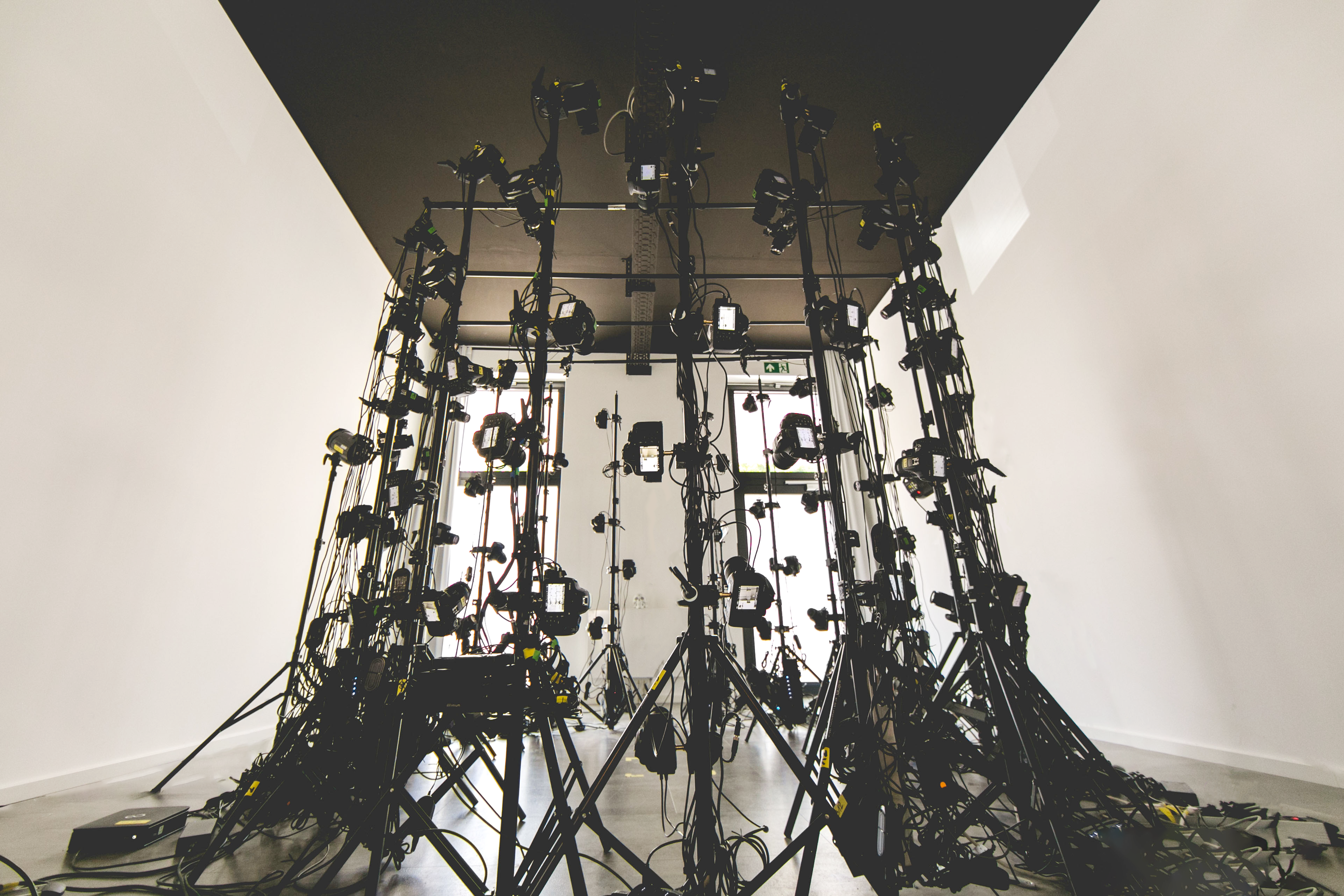
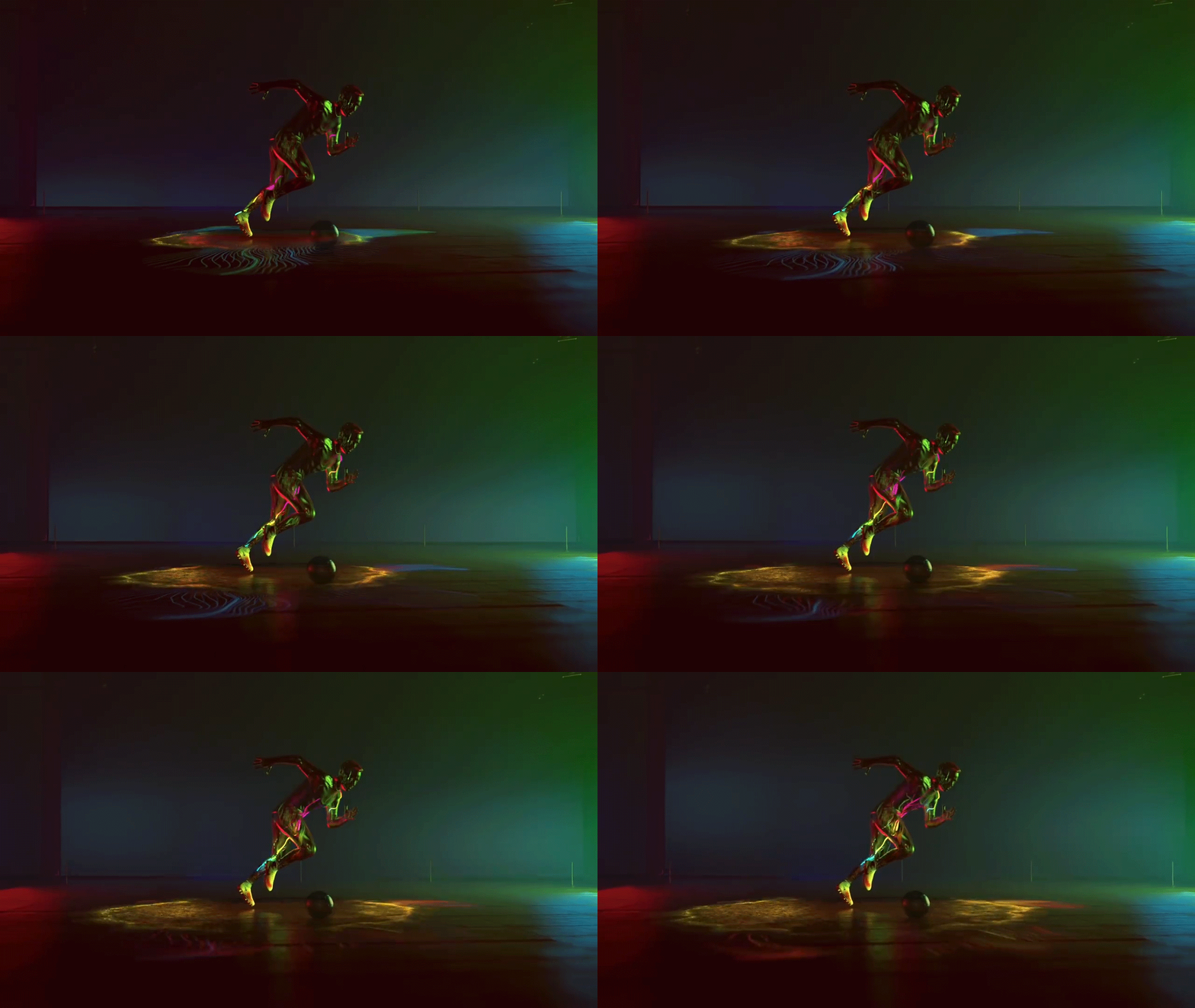
Technology choices matter too. Motion capture, photogrammetry and real-time engines can accelerate the right project, but they still require planning and skilled execution. Mimic’s advertising technology workflow combines tools such as motion capture, 3D scanning and virtual production with creative direction, so the technology serves the campaign rather than becoming a novelty.
Finally, schedule changes price. A compressed deadline can require more artists, parallel work, priority rendering and faster approvals. A realistic schedule creates room to solve problems early, when changes are cheaper.
What can different budget levels deliver?
A lean budget works best when the idea is designed around one hero asset and a small number of strong shots. The team might create a six-to-fifteen-second product reveal, reuse supplied CAD, work in one environment and deliver a limited set of formats. Restraint is not automatically a compromise: one memorable visual can outperform a longer film full of weaker moments.
A mid-range budget can support original modeling, a richer environment, several shots, more sophisticated animation and a coordinated family of campaign assets. This level often suits product launches, paid social campaigns and explainers that need enough variety for testing. Planning horizontal and vertical framing from the storyboard stage is much cheaper than redesigning compositions after the master film is complete.
A premium budget opens the door to cinematic art direction, custom characters, complex simulations, live-action integration, high-end sound and extensive localization. It may also create reusable digital assets that continue producing value beyond one campaign. A product model can support later films, interactive demos, retail content, still imagery or immersive experiences.
If a campaign needs a recognizable digital spokesperson rather than only a product film, compare the production implications of digital avatars for advertising. A reusable avatar can deliver new scripts, languages and formats, but the initial character design, likeness approval, rigging and performance standard must be budgeted properly.
Ask vendors to distinguish one-time asset investment from per-deliverable production. That makes quotations easier to compare and shows where future campaigns may become more efficient.
Is CGI cheaper than live-action advertising?
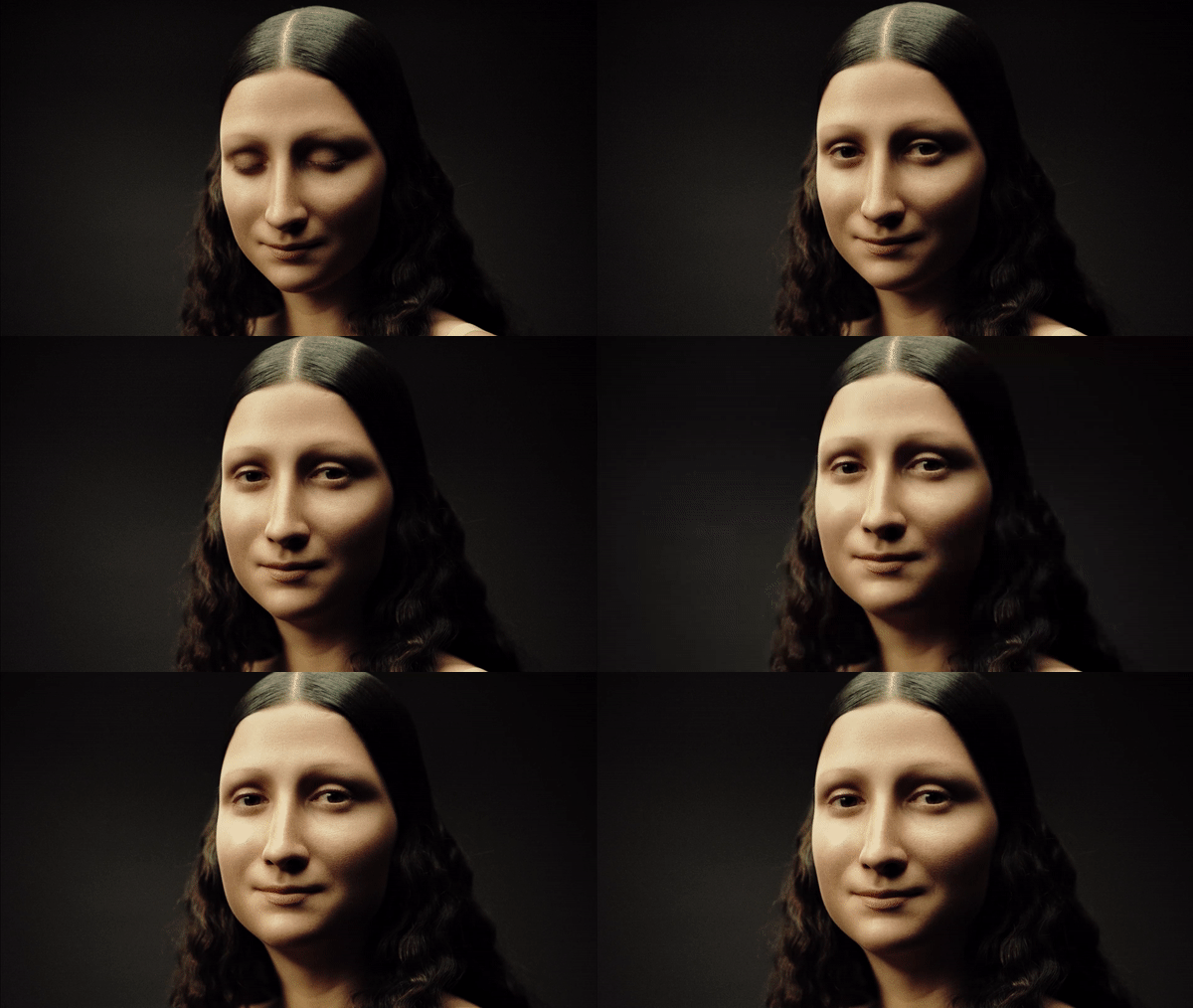
CGI is not always cheaper, and cost alone is the wrong test. It is often more valuable when a concept would be impossible, unsafe or expensive to film; when the product does not yet physically exist; or when many visual versions must be created from the same core assets. It can remove location, travel, construction and repeated-shoot constraints, but it replaces them with modeling, animation, rendering and technical supervision.
Live action can be more efficient for authentic human performance, documentary storytelling or a straightforward shoot in an available location. CGI is stronger for controlled product beauty, impossible camera moves, precise transformations and consistent global adaptation. Hybrid production often gives the best result: film people or practical elements, then use VFX and 3D where they add meaningful control.
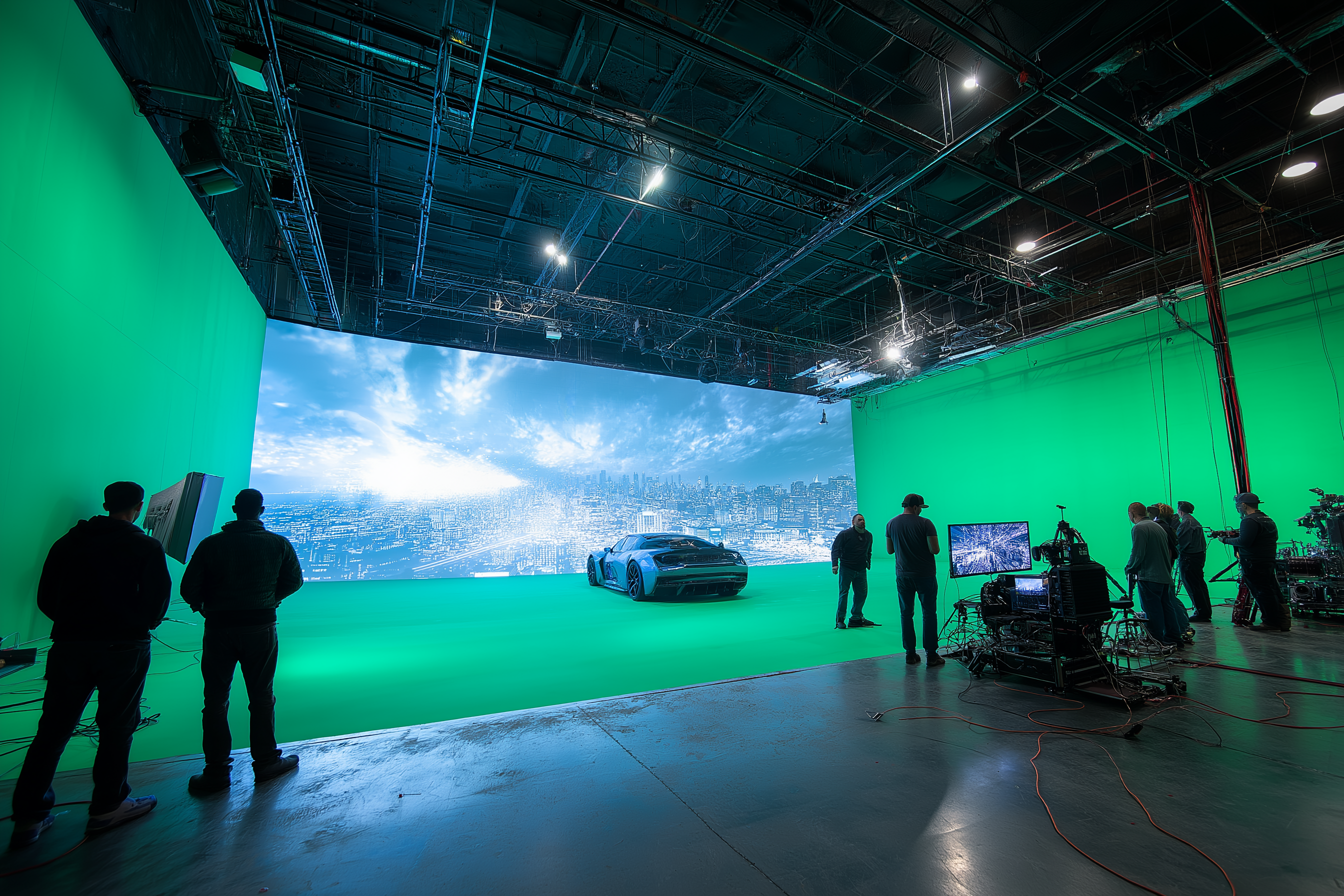
Virtual production is another hybrid option. It places real performers and products inside responsive digital environments, allowing teams to see more of the final image during filming. Read Mimic’s guide to virtual production for advertising campaigns for use cases, planning considerations and campaign applications.
Compare total campaign cost, not only the master film. Include reshoots, travel, set storage, seasonal changes, localization and the cost of producing alternate aspect ratios. CGI may justify a larger initial investment when it reduces repeated production or unlocks assets that can be reused across channels.
Mimic Advertising’s broader studio approach and production background can help determine whether a CGI, live-action or hybrid solution is the most efficient path for the idea.
How can brands control 3D animation cost?
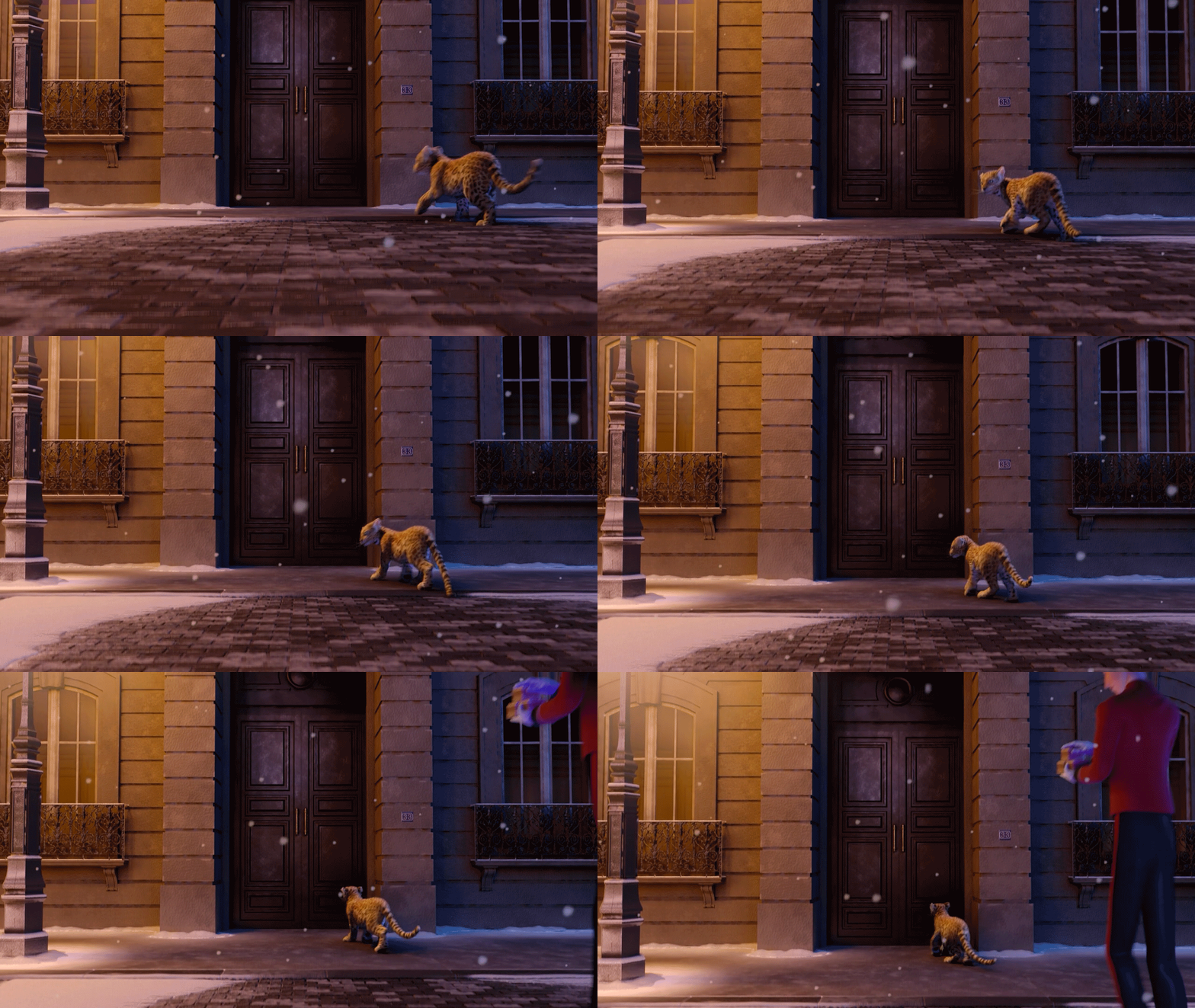
The best cost control happens before animation starts. Approve the message, script, storyboard and visual direction in sequence. A change on a storyboard is inexpensive; the same change after modeling, animation, simulation and rendering can affect several departments.
Define one primary audience and one campaign objective.
Share CAD, packaging files, brand assets and technical references early.
Rank deliverables as essential, useful or optional.
Name the final decision-maker and consolidate feedback.
Set the number of review rounds and what each round approves.
Design every required aspect ratio before production begins.
Identify assets that should be reusable in future campaigns.
Protect contingency for genuinely new information, not unfocused experimentation.
A good brief should state the product, promise, audience, desired action, channels, durations, markets, deadline, reference quality and approximate budget range. Budget transparency lets the studio recommend a concept that is ambitious within the real constraint. Hiding the range can waste time on treatments that were never feasible.
Review relevant Mimic Advertising insights and reference campaigns before briefing. Then share the examples you like and explain why: lighting, pacing, realism, humor, camera movement or product focus. References communicate quality expectations better than adjectives such as “premium” or “cinematic.”
Do not cut pre-production to save money. Clear storyboards, animatics and style frames expose misunderstandings before expensive production begins. Likewise, decide whether sound design, voiceover, music licensing, subtitles and final platform specifications are included in the quote. These details influence how finished and effective the ad feels.
When you are ready, use Mimic Advertising’s campaign contact section to share your objective, formats and timeline. A precise request makes the first estimate faster and more useful.
Frequently asked questions
How much does a 30-second 3D animation cost?
A 30-second advertising animation may range from roughly €10,000 to €100,000 or more. Complexity, realism, shot count, custom assets, simulations, sound, revisions and delivery formats matter more than duration alone.
How long does a CGI advertising project take?
A focused product animation may take four to eight weeks. A multi-shot cinematic campaign can require eight to sixteen weeks or longer, especially when it includes character work, live-action production, complex simulation or many approvals.
Why is photorealistic CGI expensive?
Photorealism depends on accurate models, materials, lighting, physics, rendering and compositing. Small errors become visible in close-ups, so specialists spend time reproducing surface detail, reflections, movement and camera behavior convincingly.
Can existing CAD files reduce the price?
Yes, when the files are accurate and suitable for visual production. They still may need cleanup, optimization, UV work and new materials, but they can reduce modeling effort compared with rebuilding a product from reference photographs.
Is AI making 3D animation cheaper?
AI can accelerate research, ideation, versioning and selected production tasks. It does not remove the need for art direction, brand control, consistency, rights review and professional finishing. Savings depend on whether AI genuinely fits the workflow.
What should be included in a CGI animation quote?
Look for creative development, asset creation, shot production, rendering, compositing, editing, sound, review rounds, deliverable formats, usage assumptions, schedule and exclusions. Ask which assets you will own or may reuse.
Can one CGI asset be reused across campaigns?
Often yes. A well-built product, character or environment can support new shots, still images, social edits, interactive demos and localized campaigns. Reuse should be planned in the original technical specification and licensing agreement.
Does vertical social content cost extra?
It can. Simple crops may be inexpensive, but a strong vertical composition often needs alternate camera framing, layout or animation. Designing all aspect ratios during storyboarding keeps adaptation more efficient.
How many revision rounds are normal?
Two or three structured rounds per major phase are common, but every studio scopes reviews differently. The important point is to define approval milestones and consolidate stakeholder feedback before production begins.
What information does a studio need to estimate accurately?
Provide the campaign goal, audience, message, duration, shot or deliverable list, visual references, available product assets, platforms, aspect ratios, languages, deadline, approval process and budget range.
Plan a cost-effective CGI campaign
3D animation cost becomes easier to manage when creative ambition, asset complexity and delivery needs are defined together. Start with the business outcome, invest in the shots audiences will remember, and approve decisions before they become expensive to change. The goal is not the cheapest possible animation; it is the strongest campaign value for the available budget.
Ready to price your idea? Explore Mimic Advertising’s VFX and 3D services or discuss your CGI brief with your brief, reference quality, formats and target launch date for a tailored production recommendation.
How much does professional 3D animation for advertising cost?
A polished 3D animation can cost anywhere from a few thousand euros for a focused product sequence to a six-figure budget for a cinematic campaign with custom characters, complex simulations, live-action integration and many deliverables. The useful answer is not one universal price; it is a transparent breakdown of the creative and technical decisions that drive the quote.
This guide explains 3D animation cost for brand teams, agencies and producers planning CGI advertising. It covers realistic budget bands, the biggest cost factors, when CGI can outperform live action, and how to prepare a brief that helps a studio quote accurately. If your campaign needs photoreal products, environments or visual effects, explore Mimic Advertising’s CGI production scope and deliverables alongside the guidance below.
Table of Contents
How much does 3D animation cost?
For advertising, a practical starting range is roughly €5,000–€15,000 for a short, tightly scoped CGI product animation; €15,000–€50,000 for a polished multi-shot film with custom assets and richer art direction; and €50,000–€150,000 or more for a cinematic campaign involving photoreal environments, characters, advanced effects, live-action plates or extensive versioning. These are planning ranges, not fixed rate cards. A ten-second technically demanding shot can cost more than a visually simple sixty-second explainer.
Studios usually estimate a project by production effort rather than charging only by finished minute. The budget may include creative development, storyboards, 3D modeling, materials, lighting, animation, simulation, rendering, compositing, editing, sound and review rounds. A credible estimate should connect each cost to a defined deliverable and approval stage.
For brands that need strategy, filming and post-production in one pipeline, Mimic’s creative advertising production services can combine live action, motion graphics and CGI without splitting responsibility across several suppliers. That integration can reduce handoff risk even when it does not reduce every line item.
The most reliable way to budget is to define the desired result first: duration, visual style, number of shots, platforms, markets, deadlines and existing assets. Once those variables are known, a studio can separate essential production from optional enhancements and propose a sensible scope.
What factors change a CGI advertising budget?
The largest cost driver is asset complexity. If accurate CAD files, packaging artwork and brand guidelines already exist, a team may start close to production-ready geometry. If the product must be modeled from photographs, scanned, cleaned and rebuilt for close-up realism, asset creation becomes a substantial phase. Organic characters, hair, cloth and facial performance generally require more specialist work than a rigid consumer product.
The second driver is shot complexity. A camera move around a stationary object is usually simpler than a transformation, destruction effect, liquid simulation or crowd scene. Photorealism also raises the standard for materials, tiny surface imperfections, reflections, lighting and compositing. Every element must behave believably when viewed at campaign resolution.
Creative scope: concept development, script, storyboard and style frames.
Asset scope: number of products, characters, environments and reusable variants.
Animation scope: shot count, duration, performance, camera work and simulation.
Rendering scope: resolution, realism, frame rate and turnaround time.
Delivery scope: TV, social, vertical, square, web, event and regional versions.
Review scope: stakeholder count, approval rounds and late-stage changes.
Technology choices matter too. Motion capture, photogrammetry and real-time engines can accelerate the right project, but they still require planning and skilled execution. Mimic’s advertising technology workflow combines tools such as motion capture, 3D scanning and virtual production with creative direction, so the technology serves the campaign rather than becoming a novelty.
Finally, schedule changes price. A compressed deadline can require more artists, parallel work, priority rendering and faster approvals. A realistic schedule creates room to solve problems early, when changes are cheaper.
What can different budget levels deliver?
A lean budget works best when the idea is designed around one hero asset and a small number of strong shots. The team might create a six-to-fifteen-second product reveal, reuse supplied CAD, work in one environment and deliver a limited set of formats. Restraint is not automatically a compromise: one memorable visual can outperform a longer film full of weaker moments.
A mid-range budget can support original modeling, a richer environment, several shots, more sophisticated animation and a coordinated family of campaign assets. This level often suits product launches, paid social campaigns and explainers that need enough variety for testing. Planning horizontal and vertical framing from the storyboard stage is much cheaper than redesigning compositions after the master film is complete.
A premium budget opens the door to cinematic art direction, custom characters, complex simulations, live-action integration, high-end sound and extensive localization. It may also create reusable digital assets that continue producing value beyond one campaign. A product model can support later films, interactive demos, retail content, still imagery or immersive experiences.
If a campaign needs a recognizable digital spokesperson rather than only a product film, compare the production implications of digital avatars for advertising. A reusable avatar can deliver new scripts, languages and formats, but the initial character design, likeness approval, rigging and performance standard must be budgeted properly.
Ask vendors to distinguish one-time asset investment from per-deliverable production. That makes quotations easier to compare and shows where future campaigns may become more efficient.
Is CGI cheaper than live-action advertising?
CGI is not always cheaper, and cost alone is the wrong test. It is often more valuable when a concept would be impossible, unsafe or expensive to film; when the product does not yet physically exist; or when many visual versions must be created from the same core assets. It can remove location, travel, construction and repeated-shoot constraints, but it replaces them with modeling, animation, rendering and technical supervision.
Live action can be more efficient for authentic human performance, documentary storytelling or a straightforward shoot in an available location. CGI is stronger for controlled product beauty, impossible camera moves, precise transformations and consistent global adaptation. Hybrid production often gives the best result: film people or practical elements, then use VFX and 3D where they add meaningful control.
Virtual production is another hybrid option. It places real performers and products inside responsive digital environments, allowing teams to see more of the final image during filming. Read Mimic’s guide to virtual production for advertising campaigns for use cases, planning considerations and campaign applications.
Compare total campaign cost, not only the master film. Include reshoots, travel, set storage, seasonal changes, localization and the cost of producing alternate aspect ratios. CGI may justify a larger initial investment when it reduces repeated production or unlocks assets that can be reused across channels.
Mimic Advertising’s broader studio approach and production background can help determine whether a CGI, live-action or hybrid solution is the most efficient path for the idea.
How can brands control 3D animation cost?
The best cost control happens before animation starts. Approve the message, script, storyboard and visual direction in sequence. A change on a storyboard is inexpensive; the same change after modeling, animation, simulation and rendering can affect several departments.
Define one primary audience and one campaign objective.
Share CAD, packaging files, brand assets and technical references early.
Rank deliverables as essential, useful or optional.
Name the final decision-maker and consolidate feedback.
Set the number of review rounds and what each round approves.
Design every required aspect ratio before production begins.
Identify assets that should be reusable in future campaigns.
Protect contingency for genuinely new information, not unfocused experimentation.
A good brief should state the product, promise, audience, desired action, channels, durations, markets, deadline, reference quality and approximate budget range. Budget transparency lets the studio recommend a concept that is ambitious within the real constraint. Hiding the range can waste time on treatments that were never feasible.
Review relevant Mimic Advertising insights and reference campaigns before briefing. Then share the examples you like and explain why: lighting, pacing, realism, humor, camera movement or product focus. References communicate quality expectations better than adjectives such as “premium” or “cinematic.”
Do not cut pre-production to save money. Clear storyboards, animatics and style frames expose misunderstandings before expensive production begins. Likewise, decide whether sound design, voiceover, music licensing, subtitles and final platform specifications are included in the quote. These details influence how finished and effective the ad feels.
When you are ready, use Mimic Advertising’s campaign contact section to share your objective, formats and timeline. A precise request makes the first estimate faster and more useful.
Frequently asked questions
How much does a 30-second 3D animation cost?
A 30-second advertising animation may range from roughly €10,000 to €100,000 or more. Complexity, realism, shot count, custom assets, simulations, sound, revisions and delivery formats matter more than duration alone.
How long does a CGI advertising project take?
A focused product animation may take four to eight weeks. A multi-shot cinematic campaign can require eight to sixteen weeks or longer, especially when it includes character work, live-action production, complex simulation or many approvals.
Why is photorealistic CGI expensive?
Photorealism depends on accurate models, materials, lighting, physics, rendering and compositing. Small errors become visible in close-ups, so specialists spend time reproducing surface detail, reflections, movement and camera behavior convincingly.
Can existing CAD files reduce the price?
Yes, when the files are accurate and suitable for visual production. They still may need cleanup, optimization, UV work and new materials, but they can reduce modeling effort compared with rebuilding a product from reference photographs.
Is AI making 3D animation cheaper?
AI can accelerate research, ideation, versioning and selected production tasks. It does not remove the need for art direction, brand control, consistency, rights review and professional finishing. Savings depend on whether AI genuinely fits the workflow.
What should be included in a CGI animation quote?
Look for creative development, asset creation, shot production, rendering, compositing, editing, sound, review rounds, deliverable formats, usage assumptions, schedule and exclusions. Ask which assets you will own or may reuse.
Can one CGI asset be reused across campaigns?
Often yes. A well-built product, character or environment can support new shots, still images, social edits, interactive demos and localized campaigns. Reuse should be planned in the original technical specification and licensing agreement.
Does vertical social content cost extra?
It can. Simple crops may be inexpensive, but a strong vertical composition often needs alternate camera framing, layout or animation. Designing all aspect ratios during storyboarding keeps adaptation more efficient.
How many revision rounds are normal?
Two or three structured rounds per major phase are common, but every studio scopes reviews differently. The important point is to define approval milestones and consolidate stakeholder feedback before production begins.
What information does a studio need to estimate accurately?
Provide the campaign goal, audience, message, duration, shot or deliverable list, visual references, available product assets, platforms, aspect ratios, languages, deadline, approval process and budget range.
Plan a cost-effective CGI campaign
3D animation cost becomes easier to manage when creative ambition, asset complexity and delivery needs are defined together. Start with the business outcome, invest in the shots audiences will remember, and approve decisions before they become expensive to change. The goal is not the cheapest possible animation; it is the strongest campaign value for the available budget.
Ready to price your idea? Explore Mimic Advertising’s VFX and 3D services or discuss your CGI brief with your brief, reference quality, formats and target launch date for a tailored production recommendation.